

-
Line R1
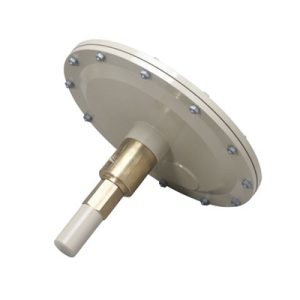
The 2-way pneumatic relay R1 (Direct or Reverse) is typically used together with a pneumatic switch to block or put back valves. It can also be used in pneumatic instruments as secondary element. When the registered pressure reaches the setting relay value, this sends a pneumatic signal to the switch producing a variation in their state. Its main function is to register the pressure in service line.
-
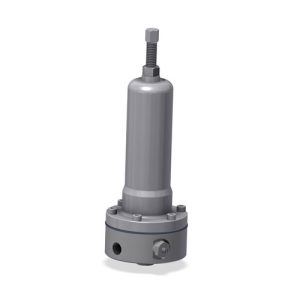
Line P6351SR
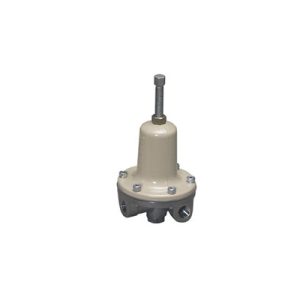
The EPTA® P6351SR is a pressure reducing pilot used in pneumatic instruments to control the regulated pressure and to keep it stable regardless the downstream variation in the valve it controls.
It is used in valves type FC with differential actuator line RG.
It is also used in valves type FO with differential actuator as for example RG97, RG97S, RG107, RG2050, RG2070. -
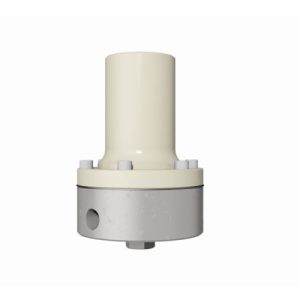
Line PR6754
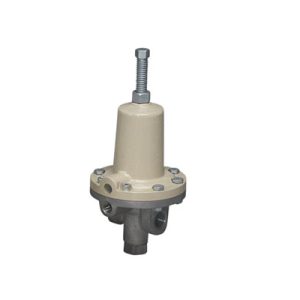
The EPTA® PR6754 pre-reducing pressure is used in pneumatic instruments to control the regulated pressure and to keep it stable regardless the downstream variation of the valve it controls. It receives an external signal which adds to the range of the spring previously compressed, so the outlet pressure can pair with the variations in the signal and thus maintain a constant differential in the pilot to provide a better control of the valve.
-
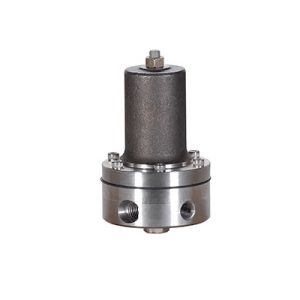
Line PR
The EPTA® PR pressure pre-reducer is used mainly in pilot regulating valves or in pneumatic instruments to control the regulated pressure and to keep it stable regardless the downstream variation. In order to make the outlet pressure pair the variations of the signal, and thus to maintain a constant differential in the pilot so as to have a better control of the valve.
As the name suggests, it is used to reduce the inlet pressure to a pilot, thus improving the performance of the valve the pilot controls. -
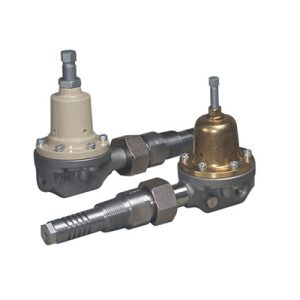
Line RP1305
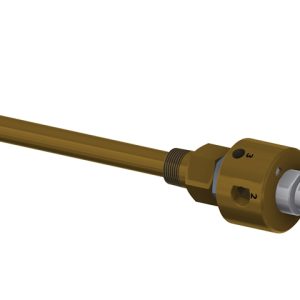
The EPTA® RP1305 high pressure reducer is used to avoid hydrates to appear when there are big increases in pressure. This regulator is used for services with natural gas, air or propane and other gases that are not aggressive to the construction materials.
The reducer expansion point is inside the flow tube of the fluid which pressure we try to reduce. Therefore, as the temperature of the gas in the tube is relatively high, the formation of hydrates in that point of expansion are prevented. -
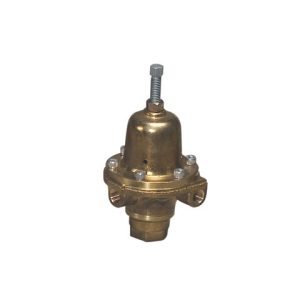
Line RP1301
The EPTA® RP1301 high pressure reducers are used in pressure reducing valves, control panels, control valves and instruments type fail close (FC) or fail open (FO), etc.
The pressure reducers, RP1301 EPTA®, are used when there is high inlet pressure (depending on the construction material) and a it is needed a high outlet of the fluid with a constant reduced pressure.
The reducers can have a heating chamber incorporated. -
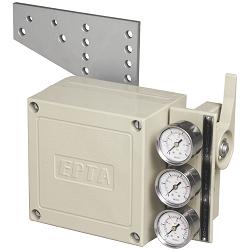
PN3582
Description
The pneumatic positioner PN3582 is an instrument used to control pneumatic control globe valves, butterfly valves, moto-levers or other devices operated by a pneumatic signal.
The positioner is also used as an element to connect a controller and a pneumatic actuator so as to secure the correct position of the stem of the actuator (or the valve) proportional to the signal received from the controller (4150/4160) -
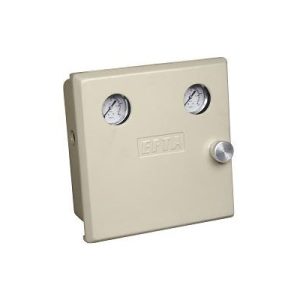
Line CP4150/4160
Description
The pneumatic pressure controller CP4150 y CP4160 has a primary element (Bourdon tube and/or bellows) which connected to the pressure that must be controlled, transforms the variations of that pressure into a pneumatic signal using a system based on the balance principle using a nozzle, a flap and readjustment bellows. This signal is amplified in stream and pressure by a pilot which produces the output signal. -
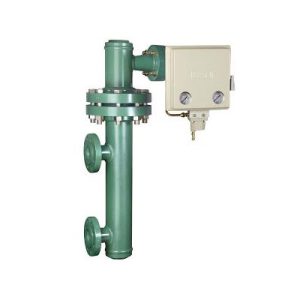
Line CN2500
Description
The EPTA® CN2500 level pneumatic controller has two main elements: the controller and the displacer. There is equipment for interface liquid-liquid with superior liquid density emulsion oil-water 0,925 g/cm³; lower liquid water: 1,02 g/cm³.